Showing posts with label Dance Related. Show all posts

Musicians have better memory

Wow! This is exciting to know! Musicians have better memory than non-musicians! Well, from a lay-man's point of view, it isn't really surprising, because, musicians work with patterns, and anything that needs to be committed to memory, when sewn in a pattern, sits there for a long time.

This is also another draft, so pardon the delay! This article came out last May too!
Last night in the U.S. many televisions were tuned to one of the biggest spectacles of the year: the American Idol finale, where America would learn which singer had been chosen as "America's favorite" (or, more cynically, who inspired the most teenagers to repeatedly dial toll-free numbers until all hours of the night). Greta and I are suckers for this sort of thing, so we watched along with the rest of the nation.
What impressed me about the show wasn't so much the prodigious vocal talents of the two finalists, but how everything was put together so hastily: there had been only six days from the previous week's episode (where the two finalists were revealed), and during this time each finalist learned at least three or four songs. The musicians who played along with them had no score to follow; they had to commit the songs to memory. Everything went off without a hitch, because these professional musicians routinely hold an astonishing variety of music in their memories.
Read the complete article here.
Don't worry. This article isn't that long either. If you're a musician too, then you would definitely find it interesting!

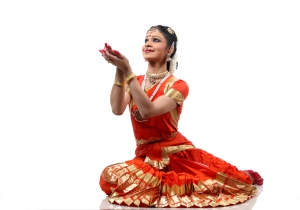
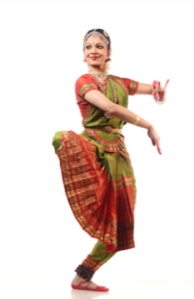
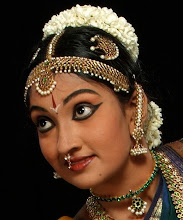
Tête-à-tête with Navia Natarajan


Here is the unabridged text of my interview with Navia Natarajan Menon, for Bharathanatyam and the Worldwide Web. An edited version of the interview was published at Carnatic Darbar.

In this day and age, when a lot of students of dance are lost to the IT industry or some other demanding careers, there are a handful of them who realize what they’re truly meant to pursue, and take the brave step toward it.

Navia Natarajan is one such student, who realized her real calling, literally while performing laboratory experiments as a research assistant. In her own words, “I would sit in front of an experiment and start to think of an item.” This isn’t surprising coming from someone who was attracted to the divine art form of Bharatnatyam at the age of 3 and was on stage at 4, although her formal training began while she was 7, under the tutelage of Smt. Radhika Kalyani, in Chennai. In just 3 years, she was on the dais, performing her maiden solo dance performance – “Arangetram”. The year after that, she was awarded the CCRT (Center for Cultural Resources and Training) scholarship in recognition of her talent. Later on, she trained under Smt. Padmini Ramachandran, in Bangalore, while pursuing her Master’s degree in Microbiology at the same time.

After her move to the United States, her bond with Bharatnatyam only grew stronger. She started the Navia Dance Academy to instill this pristine art form into other young students and bring out the wonderful dancers within them. She has given numerous performances in India, United States, United Kingdom, as well as the Middle East. She visits India every year to continue her advance training under Guru A. Lakshmanan and Bragha G. Bessell, as well as give performances.

The Department of Culture, Ministry of Human Resource Development, Government of India awarded her a scholarship in the field of Bharatnatyam in 1998. Following that, she won the top prize in Bharatnatyam at the Yuva Sangeet Nritya Mahotsava conducted by South Central Zone Cultural Center in Belgaum, Karnataka. In recognition of her talent and efforts to elevate the cultural standard, she was awarded the Kalakusuma Award by the Aryabhata Cultural Organization, Bangalore, in 2000. In 2002, she won the competition held by Tamil Nadu Eyal Esai Nadagamandram, Government of Tamil Nadu, which gave her the opportunity to perform at several prestigious dance festivals in Tamil Nadu. She was upgraded to a top-grade auditioned artist in the “A+” category at Prasar Bharathi, Doordarshan, New Delhi in 2004. She is an empaneled artist of ICCR (India Council for Cultural Relations), New Delhi, since 2007.

Read along to know what Navia has to say in our tête-à-tête.

Bharathanatyam and the Worldwide Web: When, where and how did your dance lessons begin?
Navia Natarajan: I was formally initiated into dancing at the age of 7 under the guidance of Smt Radhika Kalyani in Chennai. But it was at the age of 3 in Cochin, when I apparently saw our family friends taking dance lessons. I believe I was so mesmerized by the sheer beauty of it, that I asked my mother if I could also take classes. This is what my mother told me. That’s how I embarked on this journey. I was 4 when I first took to the stage for a folk number. We then moved to Chennai when I was four.

BN: Nowadays the dance field is losing a lot of students to the IT Industry or some other demanding career. You hold a Masters degree in Microbiology and have also worked as a Research Associate for a Scientific Research Foundation in Bangalore. How did dance fit into your schedule amidst all that? What would you tell students of dance who want to pursue or are pursuing a professional degree as well?
NN: Frankly speaking I have never analyzed all that. The reason being ever since I was a school going student, I was also a student of dance. Dance classes and classes at school went parallel to each other. This was possible only because my parents backed me and supported me thro and thro. There was no room for excuses for not having fared well in studies or dance. All of it was meant to be a part and parcel of my life. I doubt if during my early school days I was even aware of the intrinsic meaning of the word “dedication” or for that matter “passion”. I probably went about it like a normal chore. After I performed my arengetram in Chennai. My father got transferred to Hosur.
Hosur is approximately an hour away from Bangalore. He and my mother used to drive me to Bangalore every weekend for my dance classes with Guru Smt Padmini Ramachandran. We then moved to Bangalore.
During my high school days, ones the day ends I would rush to the dance class looking forward to doing the adavus or learning an item. While in college I would do the same except that at times I would be exhausted after all the experiments that had to be conducted. Even while at work the routine was the same, but the approach started to change. I was beginning to feel a tug at my heart. An emotional bonding that was surfacing towards my conscious level.
But even then, I used to only treat it as a hobby. It was during my days as a research assistant that I felt a deep urge to take dancing seriously. I would sit in front of an experiment and start to think of an item. That was an eye opener. That is when I decide to take dancing seriously.
So all that I would like to tell students of dance who want to pursue a professional degree is that, try to handle both and do justice to both. Never confine yourself, never limit yourself with self-inflicted “it is tough” thoughts.
I was able to juggle all this solely because of the constant encouragement and support of my father Mr. M. Natarajan and my mother Varada. They served and still serve as an impetus to fuel my passion and goals. After marriage, I also have my husband Rupesh who is a pillar of support, though he [is] still in the process of understanding the significance of dance in my life.
It may seem absolutely impossible, but it has possibilities as Nelson Mandela rightly put it “It always seems impossible until it’s done.” There will be a point when, they will be able to decide with conviction if they want to take up dance as their career or some other field.

BN: You have worked with dancers from different styles. Your initial training was in Vazhuvoor Bhani, you have collaborated with Madurai Sri. R. Muralidharan, you have worked with Malathi Iyengar and you continue advanced training with A Lakshmanan, who runs the Nrithyalakshana School in Chennai and Bragha G Bessell. Tell us about your working experiences.
NN: It is interesting, when one collaborates with artist of exceptional caliber. One gets to understand another artists working method, how their experiences mould their expression and vision, the kind of hard work they put in to produce and launch their productions. It has been a very enriching experience and I feel deeply honored to have worked them.
My advance training with Lakshman sir and Bragha akka has been extremely gratifying. While with Lakshman sir I am learning how to understand the body, the precision of body lines, how an amalgamation of grace and energy can enhance a performance, with bragha akka I am learning ways of interpreting a line, a passage, the kind of episodes that can be used to articulate, how even a slightest movement of the hand or a small twitch of a facial muscle can change the color and context of the item.
I derive a lot of inspiration from them, their attention to details and above all their total commitment and dedication to the art forms.

BN: Was it difficult for you to move to US as a dancer?
NN: Interestingly, it was actually after reaching this land that my personality underwent a progressive change. My dormant senses were aroused. Things that would have never crossed my mind earlier where all making their presence felt.
As initially I was unable to work here, I would spend a lot of hours contemplating. In India my life was fraught with activities I never had the time nor the inclination to spend some quality moments with myself. It was here that I actually became sensitive to my own personality, my needs and interests. So I would say that, it is this land, which, has actually been instrumental in the process of metamorphoses.
But having said that I do go to India every year to learn and to perform. I do miss India, its vibrant, energetic life. I often look forward to going to India, absorbing and basking in its rich cultural tapestry. Rushing for programmes amidst rehearsals, trying to understand another artists approach to art, themes, and interpretation without any bias. I savor the whole process of rejuvenating ones senses in India.

BN: You currently teach in US. Do you find a need for a different teaching strategy or adaptation of the teaching methods used to train students in Bharathnatyam students in India, while teaching at US? How about the difference in teaching Indian students vs. NRI students in US vs. Foreign National students, especially because the latter are not that aware of our traditions?
NN: To be candid, I began teaching only couple of years back. I was in Denver initially and with in a couple of years I moved to California. So basically I have been dealing with students who have just been initiated into Bharathanatyam. They all are still learning the steps /adavus. So right now I am not employing any strategy. But yes I have heard other teachers expressing difficulty while trying to teach them interpretive dancing. I am yet to face it. Will cross the bridge when it comes.

BN: You have performed both in India and abroad. Generally, the conception is that in India, the audience is a bit more familiar or informed or knowledgeable about Bharathnatyam, than in other parts of the world i.e. a foreign audience. Do you think it is so? If yes, can you share with us how you experienced that difference?
NN: Yes, performing in other parts of the world is quite different. That is because our Indian classical dance forms are steeped in philosophy and mythology. We as Indians are able to relate to it, as all this has been a part of our growing up in India. It is a way of life for us. We take pride in being a part of its rich heritage.
While performing nayika oriented piece say a varnam, in India we can go ahead and perform it without a lot of hassles as to whether the audience understand it or not. But in other countries, I have experienced that one needs to explain the emotional plight that the woman is in, what thoughts or desires she is journeying thro, and how the plethora of gods such as Shiva, Rama or Krishna are just protagonists in the piece. Emotions be it love, hate, anger, humor are all universal, so when an artist presents these pieces to a foreign audience we just need to package them in away that they will be able to relate. For example I recently did a piece “indendhu vachitivira”, where in a kandhitha nayika rebuffs Lord Venkatesha for being unfaithful to her. Here the audience did not know about the lord but were able to see the turmoil in the nayika.
If we take our mythological stories, there are Protagonist who are not ideal characters to emulate, some characters have shades of grey in them, some are perfect to revere and theses shades of characters can be found in all and sundry irrespective of the age/ era their hail from.
Foreign audiences do appreciate neat lines, the geometry in the execution of our steps and our grand eloquent movements. So I personally believe our art forms have various layers of meanings and contents. It is how we use those layers skillfully to present it to foreign audience. Presenting our items to them also help us to sit back and reflect on our work.
Well with the limited exposure that I have had, this is what I have felt and perceived, but then again probably I would be able understand it more as and when the journey unfolds.
Therefore a lot of dilemmas and perplexities [exist] but then I guess that is the whole beauty of being an artist, coastally evolving.


To learn more about this promising dancer and her upcoming performances, visit www.navianatarajan.com

My First Interview Ever

For some of them who don't know much about me, there is a Bharatnatyam dancer within me. But now, while doing my masters, that part of me is not too active. :(

But thanks to a wonderful person, Sangeetha Akka, I am able to contribute at least something to the dance field! In the form of articles!

Hmmm.. Maybe sometime soon I'll interview her and post it up here! :)

Sangeetha Akka manages a blog "Bharathanatyam and the Worldwide Web"; the blog name says it all. I'll save the grand intro about her for the interview! :) [Note to Sangeetha Akka: Ok. Now you've been warned!!! Hehehe!!]

She has been a big encouragement for me for being able to contribute to dance by allowing me to contribute to her blog. Thanks Akka!

So, she gave me my first interview assignment: To interview the young and inspiring dancer, Navia Natarajan. She asked me to submit the interview article to Carnatic Darbar, and they published it! Yay! And today, she would be publishing the unabridged entry on her blog! :)

Take a look at the article on Carnatic Darbar. And take a look at the unabridged version on Akka's blog.

Let me know what you think of it. :)

XOXO,

Excited 'n' Elated

A "Poised" Performance by "Shrishti - The Creation"

The Fine Arts Association of Arizona and Sampradaya Dance of India ( a dance institute in Phoenix) came together with other sponsoring associations to present Krishna Bhakthi Mala, a thematic dance presentation by the group Shrishti - The Creation, on Saturday March 7th, 2009. The image below is the flyer for the presentation.

Before I start reviewing the presentation, let me tell you guys, I am no dance critic! I am a dance student myself, learning Bharatnatyam since I was 4 years old. I learn dance from Yuva Kala Bharathi Sri. R. Vijay Madhavan, who is inturn a student of Padmasri Smt. Chitra Visweswaran. I had my maiden dance performance (Arangetram) on November 26th, 1999 and since then have been giving several solo and group dance performances. About my dance exploits - some other time! So, here is what I felt about the performance, from my point of view - from a rasika's point of view. I have tried to be as unbiased as possible, but if you think in some places I'm wrong, please forgive me! After all, this is just my opinion, and I guess every person has a right to voice their own opinion!

While the overall performance was graceful and inspiring, I feel the dance should have been a bit more vibrant and should have been exploding with energy. Group dances are always expected to be colorful and a treat to the eyes, and the dancers did justice through their perfect co-ordination, colorful costumes and colorful lighting and stage decorations - indeed a treat to the eyes. However, the theme could have been conveyed in a more convincing manner. I felt the performance was rendered at the surface level, when it could have delved a bit deeper. The theme chosen, Krishna Bhakthi Mala, revolves around Krishna - the tiny tot of Yashoda, the hearthrob of the Gopikas, the consort of Radha, the slayer of Kalinga the Serpant, the protector of Panchali, and so on.

The dancers opened with a Mallari followed by an invocatory piece - Gaaiye Ganapathi. Mallaris are part of the traditional temple repertoire, performed on the Nadhaswaram - a wind instrument. It is believed that during the Shiva Tandava, the anklets of Lord Shiva gave rise to the four syllables - Tha Dhi Thom Nam. All percussion instruments resonate these four syllables in various permutations and combinations, to give out creative jathis and sollu-kattus. Mallaris are performed in the raga Ghambiranattai. The dancers performed the mallari gracefully, though it could have been a bit more energetic, and being the opening item, it could have contained more brisk movements that would have kept the audience in rapture. The dancers acted out the story about how Lord Ganesha got his elephant head, in the sanchari of Gaaiye Ganapathi. I feel the dancers could have researched more into the meaning of the words in the song. There was one instance where the dancers gestured the face of Lord Ganapathi, when the lyric was "Vinayaka". Vinayaka means the one who has no leader or master above him. Clearly, the dancers' expression and the lyrics didnt match there. They should have probably worked more on getting their gestures right for the right words. The next item was a Jugalbhandi, that was elegantly rendered with apt costumes - one team wore skirts and the other team wore pants, or pyjamas. The choreography matched the music as well as the costumes. One major plus point in the entire performance was the dancers' attention to their positions. Each formation was neatly executed, leaving no scope for the audience to be confused - something very critical to a group performance. Exceptional sense of position. The varnam was performed next. The chosen varnam was tuned to Ragamalika, with Hindi lyrics. Varnam means color. Of course, the varnam truly was colorful - but colorful more materialistically than holistically; but that's what I felt. There were colorful costumes and colorful lights. But there wasn't much color in the expressions, where there could have been more. The sanchari of Krishna playing with the Gopis and Krishna eating mud and showing the entire universe in his mouth to Yashoda were nice, but maybe, they could have been a bit more dramatic. The main thematic presentation, Krishna Bhakthi Mala, did not start until the second half. Here, several episodes from Krishna's life - from the birth of Krishna, to the Kalinga Nardhanam, to the Panchali Vastraharan were depicted. A notable aspect of this presentation was the display of apt pictures of Krishna in the background as slides as the presentation went on. I was surprised that out of all the several episodes in Krishna's life, the dancers left out Govardhana Giridhara - the episode were Lord Krishna single-handedly lifts the Govardhana mountain to provide shelter to the people of Brindavana and protect them from the rains and thunder caused by an angry Indra. I felt the depiction of Kalinga Nardhanam lacked the power and aggression it deserved. Of course, the dancer who assumed the role of Kalinga, amused the audience by snaky gimmicks; no pun intended! But, it was a weak and vulnerable Kalinga, totally opposite to the strong and egotistical personality of his - it looked like even I could kill the snake! The duel between Krishna and Kalinga was not that powerful, it lacked vigor. It was only graceful; but here, I don't think grace is the right element to be used. The Panchali Vastraharan could also have been more dramatized. Dramatization is a very important element of dance - especially in a thematic presentation such as this.

I noticed that there were redundancies in the performance - Krishna being born out of Devaki's womb, and being brought up under Yashoda's care were repeated both in the varnam and in the main presentation. This could have been avoided, and instead they could have shown other episodes from Krishna's life - maybe the friendship between Sudhama and Krishna? or as I said earlier, the story of how he lifted the Govardhana mountain.

On the whole, it was a nice and poised performance, but I feel it could have been much better. To me, it felt like it lacked soul in it. The songs selected were apt, and showed that the dancers put in a lot of care while selecting songs. Enna thavam seidhanai Yashoda, a very popular padam by Papanasam Sri. Sivam in Ragam Kapi, set to Adi Thalam was one of the songs in the Krishna Bhakti Mala medley. One of Purandaradasa's compositions in Ragam Arabhi, Aadithano Ranga, which is on the Kalinga Nardhanam of Krishna, was also used. (This particular song is very dear to me. The story behind that would be another post! ) And the dancers did justice by performing without any mistakes, but they failed to produce the vibrations to touch our souls, with the exception of a few dancers. The dancers could have contributed more from within than with just coordinated movements. I feel they had a very nice theme, a very popular theme, and they had very good songs, and good props, and costumes too, but maybe they could have exploited all that to the fullest capacity.

The idea of having a few dancers demonstrate a summary of the next item to come is really good, and very necessary for a foreign audience. That way, the audience can follow through the performance. I remember such demonstrations from the dance programs I have seen as a kid, when I was in Dubai, when my Grand Guru - Chitra Visweswaran (we call her Chitrakka) used to demonstrate the items she was going to perform by explaining the gestures, their meanings, and their interpretations.

Several dancers all around the world do presentations based on Krishna Bhakti. I believe each dancer or choreographer, should demonstrate their individuality, their strong points, in their presentations, and these presentations should enunciate their thoughts, opinions, or interpretations. Krishna Bhakti could be interpreted in so many ways. Bhakti itself can be interpreted in several ways. And how you interpret Bhakti toward Krishna, and how you demonstrate your interpretation is what makes you unique from others. Otherwise, you would be just one another piece thrown out of the factory. Dance is a medium to communicate wih the audience, yes, but it is also a medium through which you communicate with yourself, you seek the Paramaathma within yourself. Dance is an experience - your experience in the journey toward the soul. So, perhaps the dancers could have gone that extra mile to put their mark or signature to their performance, to make it a unique experience for the audience. I dont say this as a dancer, but I say this as part of an audience. I might have not seen all the performances in the world, but I have seen enough to understand why some performances are an experience, and why some are just concerts.

So those were my thoughts. I am in NO WAY critiquing the performance. I am just sharing my thoughts on it. As a dancer myself, I have a LOT to learn, and every performance is a learning lesson for me; every performance I watch and every performance I do! A dancer grows not just by learning and performing more, but he or she grows more by watching, understanding and synthesizing what he or she learns from each performance that he or she watched. So, my advice to all the dancers out there like me, in fact, all the budding fine artists out there, please make an effort to watch others' performances. Only then you would be able to learn more. Well, I have more on that, which would pave way to another post! Stay tuned!

Until then,

XOXO,

Purple Poise